
· Dana Whitlock
How to Properly Use a Bottomless Portafilter
Nothing about the recipe changes. The dose, the grind and the ratio you used with a spouted portafilter carry straight over. What changes is that the preparation underneath that recipe is now visible, because the base of the basket is the last thing the water touches before the cup, and there is no spout left to tidy the result. This guide takes the technique in the order the shot happens: basket, distribution, tamp, lock-in, and then the part that makes the whole exercise pay — reading the stream while it runs.
The recipe carries over, the standard does not
A bottomless portafilter brews exactly the way a spouted one does. Same basket geometry, same pressure, same water path through the coffee — the two are identical from the water’s point of view. So there is no new extraction theory to learn, and no settling-in period where the shots are supposed to taste different.
What the open base does change is the tolerance for sloppy preparation. A spouted portafilter blends whatever happens at the base into one tidy stream, so a bed that was clumped or tilted still produces something that looks normal on the way down. Remove the spout and the same bed produces a visibly ragged flow. The coffee was always ragged; now you know.
That is the trade you signed up for, and it runs in your favour quickly. The four habits below take under a minute combined, none of them requires new equipment, and the base tells you after every single shot whether you performed them or skipped them.
Start with the basket: non-pressurized, dry, seated flat
Three checks before any coffee goes in, and all three take seconds.
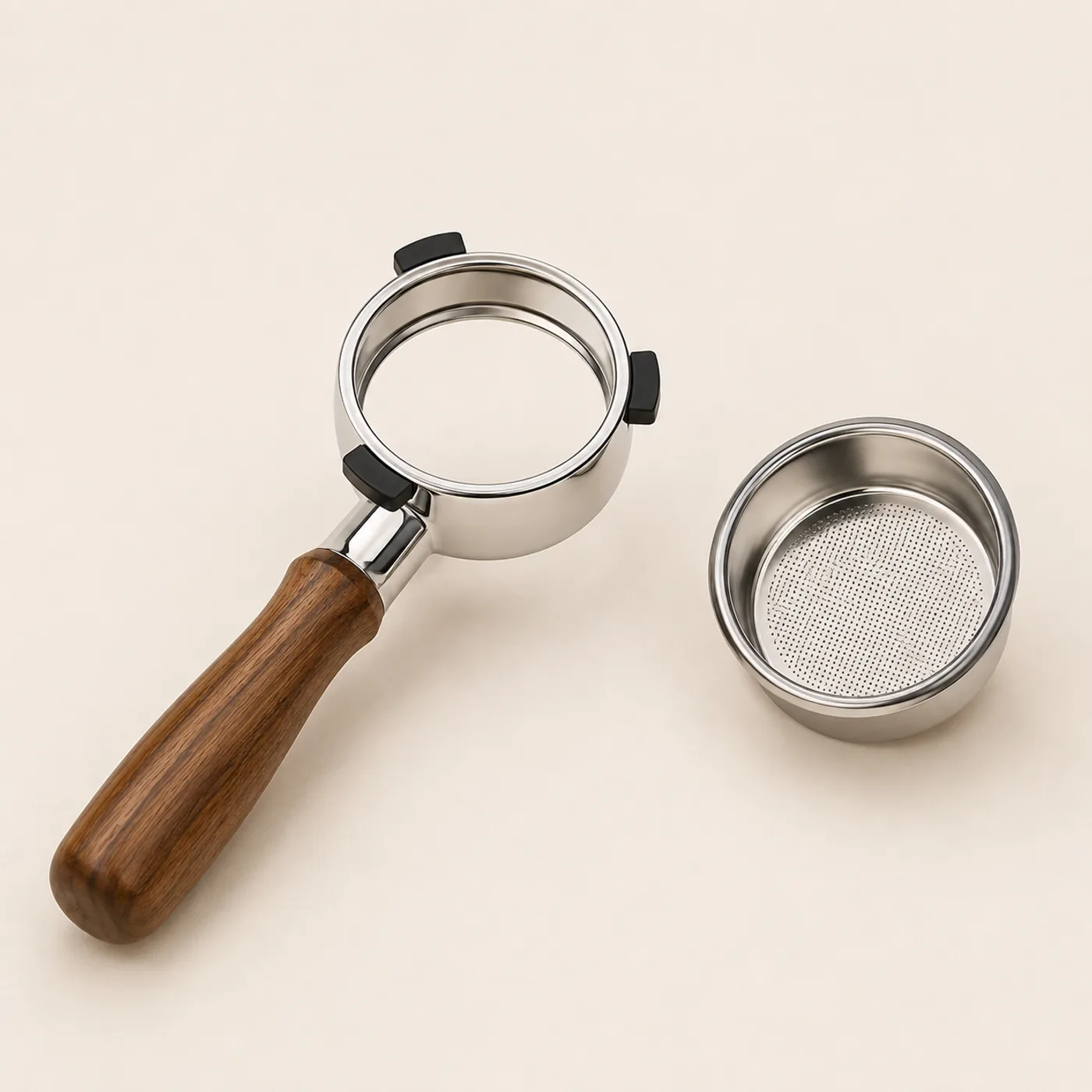
The right basket. An open base only reports the truth through a non-pressurized basket, the kind with a full field of holes across the bottom. A pressurized basket forces everything through one small exit and erases the information you removed the spout to get. Telling the two apart takes one glance underneath, and the basket shipped with every Puckwell fit is the non-pressurized kind, so if you are dosing into the basket that arrived in the box, this check is already done.
Dry and clean. Grounds cling to a wet basket wall instead of settling, and yesterday’s oils add a stale edge to today’s cup. Wipe the basket dry before dosing.
Seated flat. Fines compact under the basket rim over time and tilt it a fraction, and a tilted basket produces the same lopsided shot no matter how careful the rest of your preparation is. If the same fault appears in the same place every day, cleaning the rim and the seat is the fix, not a new technique. And if you are still choosing which portafilter fits your machine in the first place, the size guide settles that before any of this applies.
Distribute before you tamp
Coffee leaves a grinder as clumps, and it lands in a pile. Left alone, that gives you a bed that is dense where the pile was and loose everywhere else, and tamping on top presses the surface flat while the density differences stay underneath, exactly where the water will find them. Distribution is the step that removes those differences, and it is the single habit that separates a calm, centered flow from a ragged one.
The routine: take something thin — a fine needle, a straightened paperclip, a cocktail stick — and stir it through the full depth of the grounds, not just the surface. Work in small circles, out at the wall as well as through the middle, until the clumps are broken and the bed feels uniform. Then one modest tap of the portafilter on the counter to settle everything, and a finger or a straight edge drawn across the rim to level the surface. Depth matters more than pattern here: raking only the top layer leaves the clumps below intact and looks like distribution without doing the work of it.
Purpose-made distribution tools exist and do the same job with more repeatability, but the needle version is the complete technique, not a placeholder for it. Cafes ran on nothing else for years.
Tamp level, not hard
The tamp gets more attention than any other step and decides less than any of them. Its job is to compress an already-even bed into a firm, flat disc. It cannot repair an uneven bed — pressing harder on bad distribution just locks the problem in place.
Level matters far more than force. A tilted tamp leaves one side of the puck shallower than the other, water favours the shallow side, and the base shows you a stream that leans or a jet from one edge. Firm and flat is the whole assignment; leaning into it past that point changes nothing the cup can detect.
Getting level is mechanical, not a talent. Rest the basket on a flat surface rather than tamping in mid-air. Stack your grip so elbow, wrist and tamper form one vertical line. Then use the gap between the tamper edge and the basket wall as a gauge: it should look the same all the way round, and because the tamper is machined to the basket, an uneven gap is visible at a glance. Finish by pulling the tamper straight up. A slow spin on the way out polishes the surface and does nothing below it — harmless, but not the part that counts.
Lock it in like the bed is wet sand
Everything to this point produced a fragile object: a compacted disc of coffee held in shape by nothing but its own compression. The lock-in is where careless hands undo careful work.
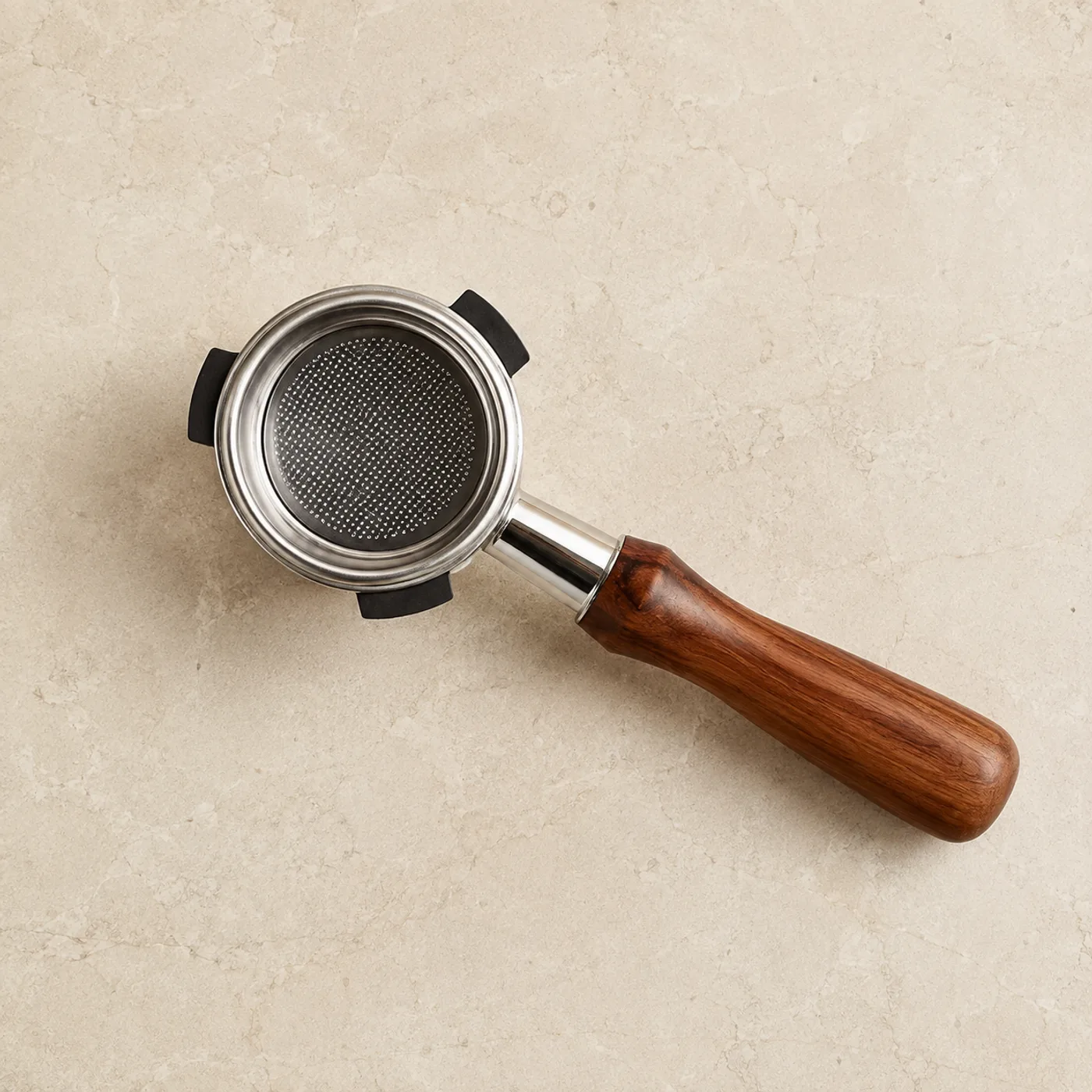
Bring the portafilter up square to the group, engage the lugs, and swing the handle to a firm stop in one smooth motion. No final wrench past the stop — the gasket seals from contact, not from torque, and the extra shove is exactly the kind of jolt that cracks a bed loose from the basket wall. Knocking the handle on the drip tray or the machine body on the way up does the same damage for the same reason.
One more habit borrowed from cafe counters: flush the group before you lock in. A short burst of water rinses the previous shot’s grounds off the screen and wets the gasket, so the portafilter seats against a clean surface instead of grinding old coffee into it. It costs nothing and it removes one more variable from the picture the base is about to show you.
Then start the shot rather than letting the loaded portafilter sit. Nothing improves while it waits, and every second it hangs there is another chance to bump it. Get the cup and the scale in position before you lock in, so the sequence is: cup ready, lock, start. One habit for the machine itself: with no spouts in the way, the stream falls from the open base, so center the cup under the basket, not where a spout would have pointed.
Read the stream from the first drop
This is the payoff, and it is a routine of its own. Put your eyes at the base as the pump starts, with enough light to see color — a small lamp beside the machine changes what you can see more than any accessory.
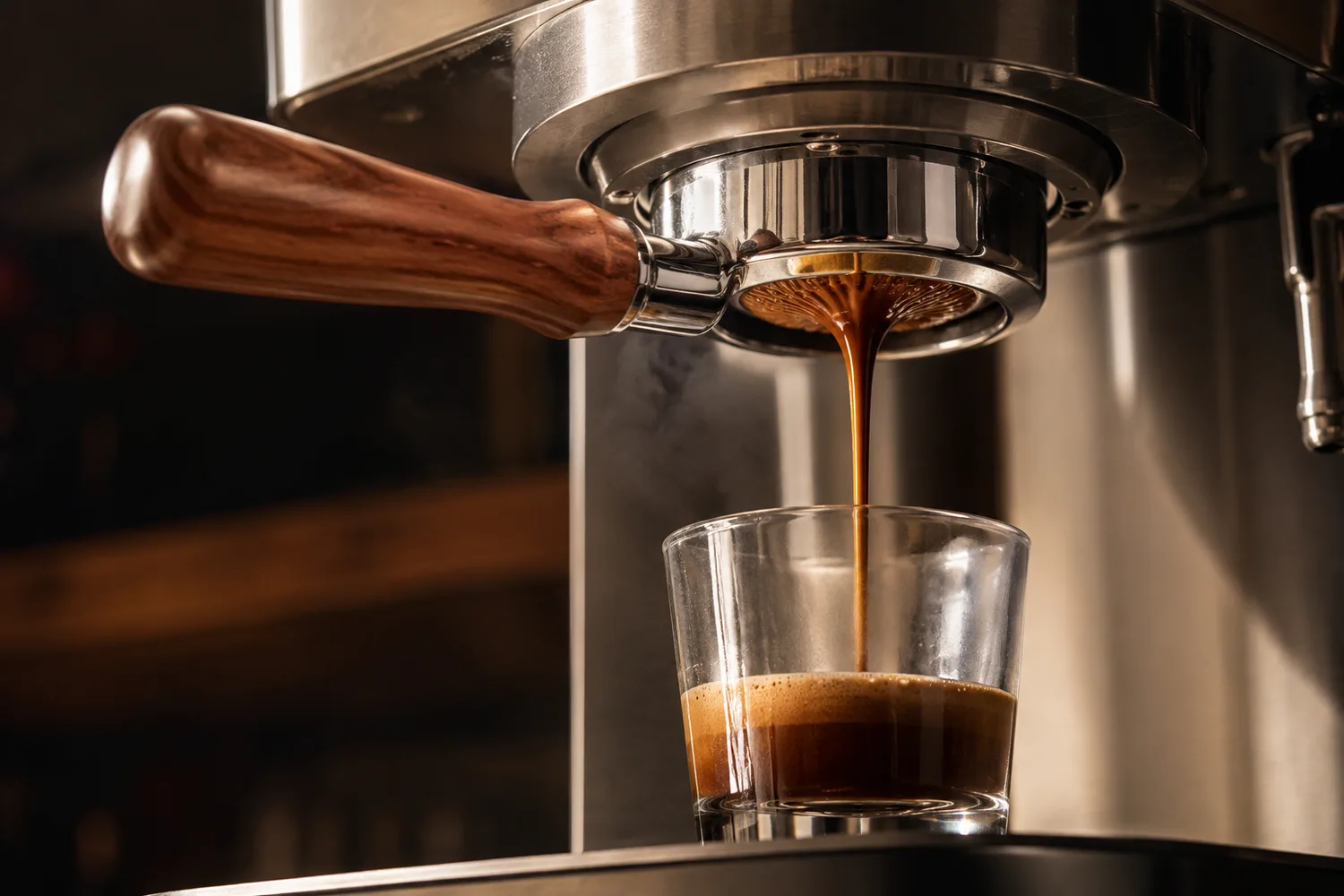
A well-prepared shot follows a known script. First, scattered dark beads appear across the whole face of the basket at roughly the same moment — the sign of a bed wetting evenly. The beads gather toward the middle, merge, and converge into a single central stream, dark at first, then a warm caramel, flowing steady and unhurried like thin honey. Toward the end the color pales as the coffee gives up the last of what it has — blonding — and the pale, thin tail is your cue that the extraction is finishing.
Departures from that script are the base doing its job. Beads that appear on one side long before the other, a stream that leans, twists, or splits in two, or a fine jet firing sideways — each one is channeling made visible, and each points back at a specific step above. The spraying guide takes those faults one by one, in the order that finds the cause fastest.
Correcting: one change, on the next shot
During the shot itself there is exactly one decision to make: when to end it. If the stream blondes early, stopping the shot saves the drink from the thin, papery tail end. Everything else you saw is information for the next shot, not something to chase mid-pull.
Between shots, the discipline is the same one that runs through every guide on this site: change one thing, pull one shot, look again. The base has usually pointed at the step that slipped — a one-sided start points at distribution, a leaning stream at the tamp, a fault that repeats in the same spot at the basket seat. After the shot, the puck confirms from the other side what the stream showed you during it.
Two cautions before you conclude anything. Judge your technique from the second shot of the day onward — the first one runs through cold metal and misbehaves for reasons that have nothing to do with your hands. And expect the first week to be noisy: the open base reports faults the spout had been hiding all along, which reads as getting worse and is actually the starting point becoming visible.
The quick table
| Step | Done right, it looks like | The habit |
|---|---|---|
| Basket | Non-pressurized, dry, sitting flat | Wipe it; clean the rim and seat weekly |
| Distribution | Uniform bed, no clumps, level surface | Stir deep with a needle, tap once, level |
| Tamp | Flat disc, even gap at the wall | Level over hard; straight pull out |
| Lock-in | Firm stop, no jolt | Cup in place first; no wrench past the stop |
| The stream | Even beads, then one caramel rope | Watch from the first drop, in good light |
| End of shot | Color pales, flow thins | Stop on blonding; change one thing next shot |
Read down the middle column and it describes less than a minute of work. That is the entire technique. The portafilter asks for nothing exotic — it asks for the same few movements done the same way, and in exchange it grades every one of them, every shot, in real time. People who pull on an open base for a month tend to find their spouted technique was the thing that needed the audit.
Where to go next
The four habits are the whole of it, and none of them asks for talent — they ask for the same order every time. Basket checked, bed distributed, tamp level, lock-in smooth, eyes on the base from the first drop. The guides linked through this page each take one branch further: what a specific fault pattern means, what the spent puck adds after the cup is poured, and why the first pull of the morning gets a pass. For the fuller picture of what the open base shows across a whole extraction, the main page follows a shot from the first drop to blonding.

Dana Whitlock · Espresso guides editor
Writes the Puckwell guides to bottomless portafilters: machine fit, puck preparation and reading a shot while it runs.